How to Choose an AI Paperless Meeting System? | GZZHYUN
How to Choose an AI Paperless Meeting System: Four Key Factors to Consider AI-powered paperless meeting systems are becoming standard equipment in government ag
How to Choose an AI Paperless Meeting System: Four Key Factors to Consider
AI-powered paperless meeting systems are becoming standard equipment in government agencies, public institutions, and enterprise meeting rooms.
However, the rapid growth of the market has also made product selection more difficult. Some suppliers specialize in software algorithms, some rely on outsourced hardware, and others claim to offer full-stack development even though their solutions are assembled from products provided by multiple vendors.
For procurement teams, comparing proposals can quickly become confusing. Transcription accuracy, hardware specifications, AI functions, security controls, technical support, and integration capabilities may all look similar on paper.
So how can an organization determine whether an AI paperless meeting system and its supplier are reliable?
Based on its experience serving hundreds of government and enterprise customers, Guangzhou Zhihui Cloud Technology Co., Ltd. recommends evaluating suppliers across four key areas:
1. Technical capability
2. Lifecycle service and support
3. Customization and integration
4. Proven industry experience
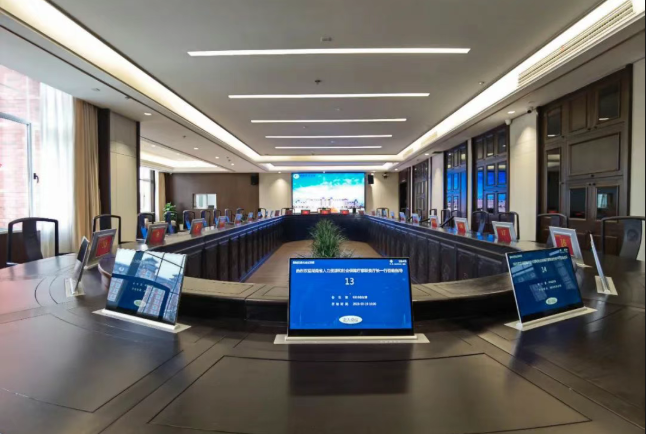
1. Technical Capability: Evaluate the Complete System
One of the first questions customers ask is: "How accurate is your speech transcription?"
Accuracy is important. Under supported conditions, Zhihui Cloud's system can provide more than 97% transcription accuracy for standard Mandarin, more than 93% for English, and real-time response latency of less than 500 milliseconds.
However, transcription accuracy alone does not determine the quality of an AI meeting system. Leading suppliers may offer similar numbers, while significant differences remain in hardware reliability, platform compatibility, and the practical depth of AI integration.
Hardware and Software Development
Many meeting system suppliers are software companies that purchase or assemble their hardware from third parties.
This may create problems when hardware and software are not designed as one system. A meeting platform can have advanced software functions but still deliver an unstable user experience if its terminals are noisy, unreliable, slow, or poorly integrated.
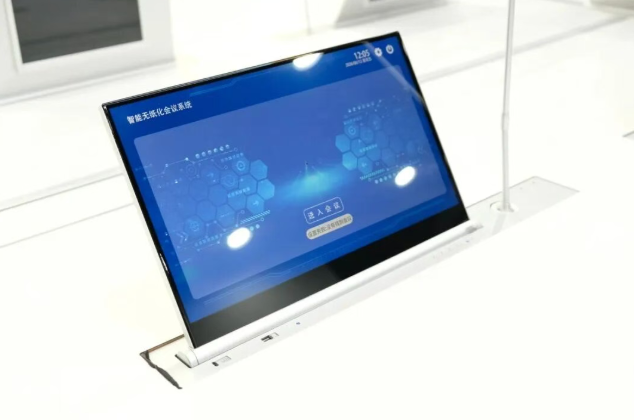
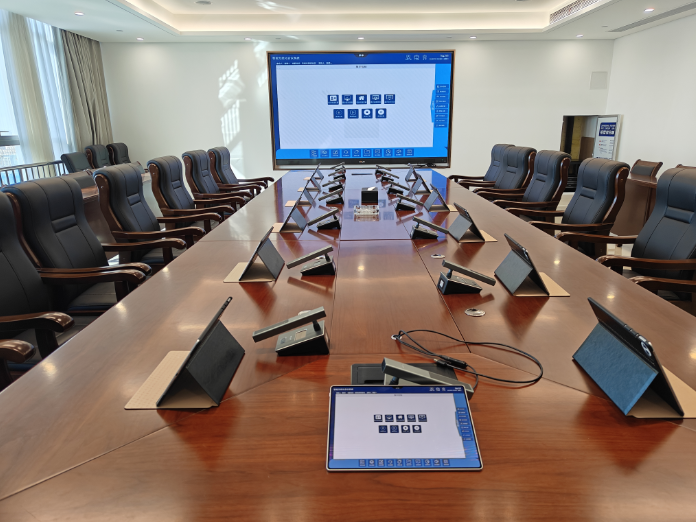
Zhihui Cloud develops both meeting software and hardware. Its motorized paperless meeting terminals use CNC-machined aluminum enclosures, synchronous belt transmission, and precision guide rails.
Operating noise can be controlled below 20 decibels under specified conditions, helping the terminals move smoothly and quietly in professional meeting environments.
When evaluating a supplier, organizations should ask:
- Does the supplier develop its own meeting terminals?
- Are the hardware and software tested together?
- What transmission and lifting mechanisms are used?
- How is operating noise controlled?
- Are replacement parts and technical support available?
- Can the supplier provide long-term hardware maintenance?
These details often have a greater effect on daily reliability than an impressive software demonstration.
Full-Stack Compatibility
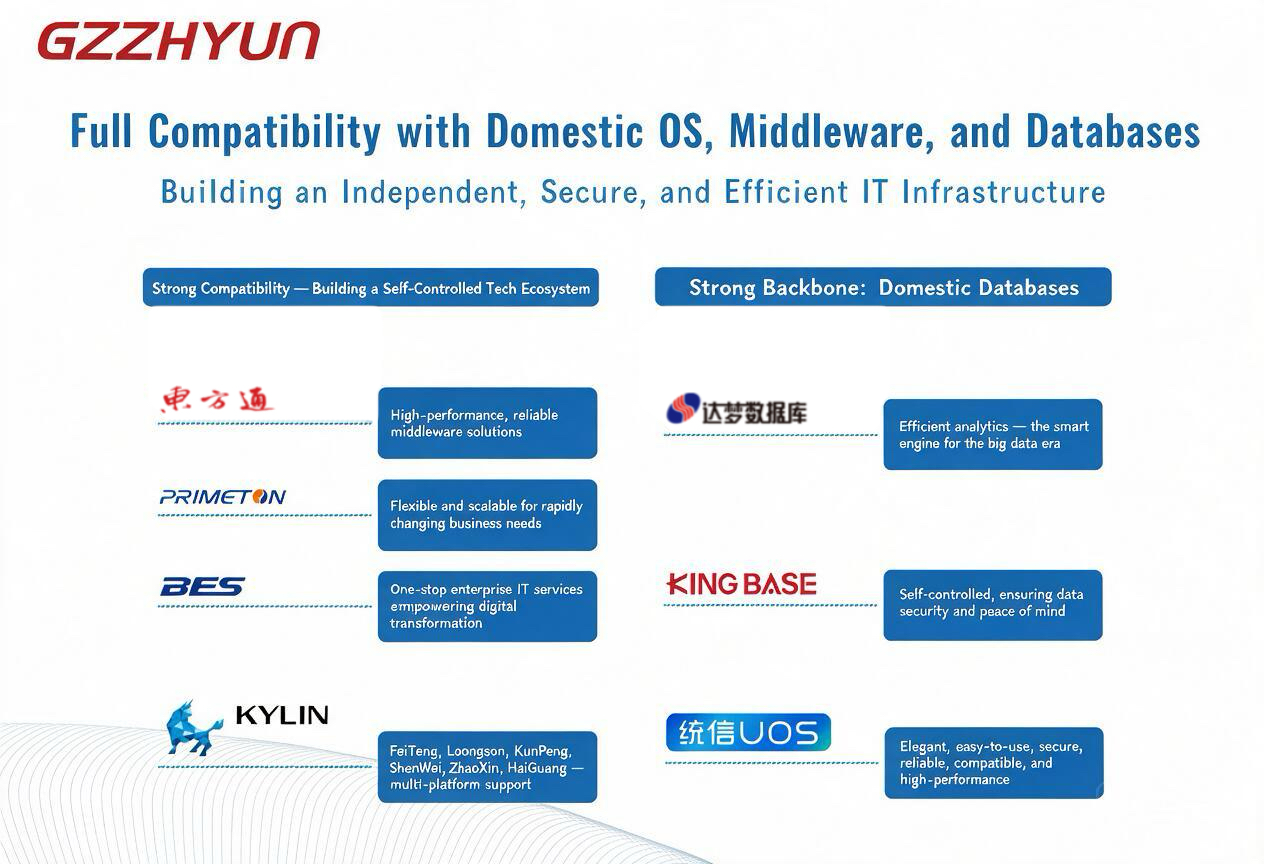
A complete meeting system may need to operate across domestic processors, operating systems, databases, and middleware.
Zhihui Cloud supports processor architectures including:
- Phytium
- Kunpeng
- Zhaoxin
The system is also adapted for operating systems such as:
- Kylin
- UnionTech UOS
Meeting information can be stored using domestic databases including Dameng and KingbaseES. The platform can also work with middleware products from providers such as Primeton and TongTech.
True compatibility requires more than installing an application and confirming that it starts successfully. Each layer must be optimized and tested for performance, stability, security, and long-term operation.
Government agencies and state-owned enterprises should therefore evaluate compatibility across the complete technology environment rather than checking only the operating system.
Practical AI Integration
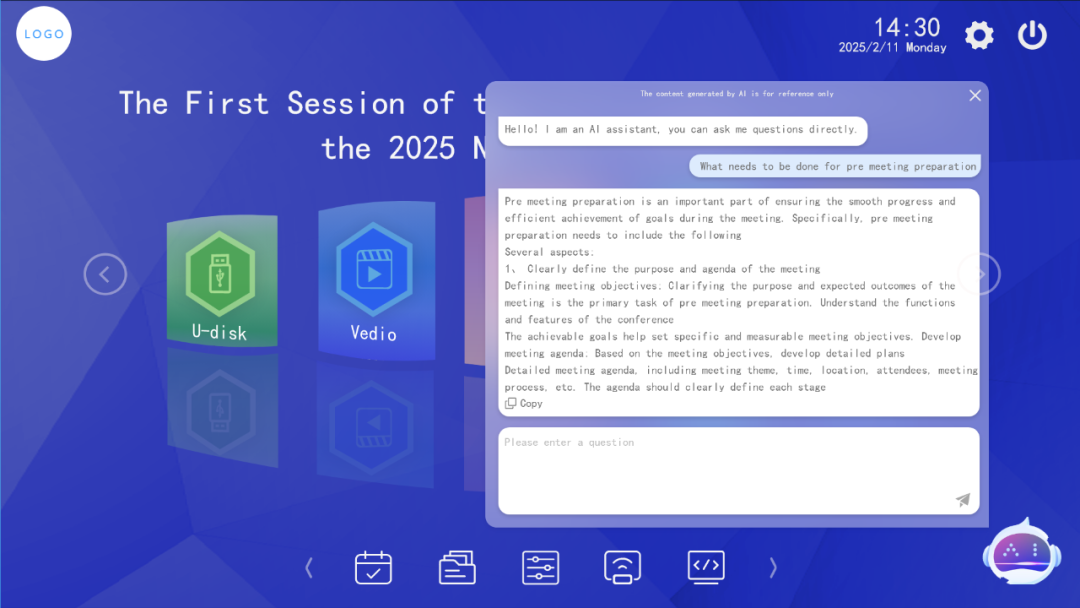
Many products claim to be AI-powered because they connect to a large language model for basic questions and answers.
That does not necessarily make the system useful in a real meeting environment.
Effective AI functions should be integrated into the complete meeting workflow.
Before a meeting, AI can:
- Analyze uploaded documents
- Extract important information
- Generate concise summaries
- Help participants review materials
- Reduce repetitive preparation work
During a meeting, AI can:
- Transcribe speech in real time
- Identify different speakers
- Connect transcript text with audio
- Support multilingual translation
- Answer questions based on approved meeting documents
After a meeting, AI can:
- Generate structured meeting minutes
- Summarize decisions
- Organize action items
- Produce meeting mind maps
- Convert discussions into searchable knowledge
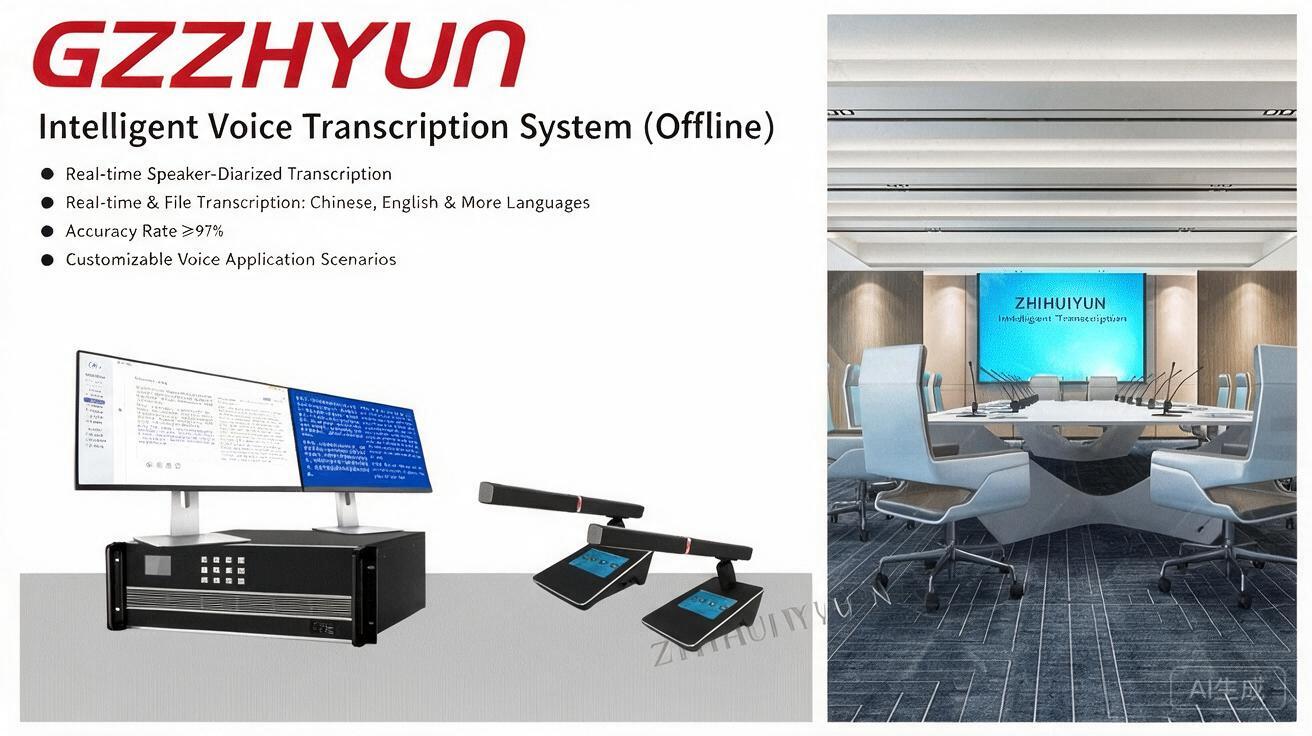
These capabilities should work directly with the meeting platform, documents, permissions, and recording system. AI functions added as isolated external tools may provide less consistent results and create a more fragmented user experience.
2. Service and Support: Evaluate the Entire System Lifecycle
A meeting system is not a product that can simply be installed and forgotten.
Operating systems change, security requirements evolve, customer workflows develop, and new compatibility issues may appear after deployment. The supplier must therefore provide reliable support throughout the system's lifecycle.
Before choosing a supplier, procurement teams should examine three areas.
Response Times
Organizations should understand how the supplier classifies and responds to different support requests.
Zhihui Cloud uses a tiered response system:
- General inquiries receive a response within four hours
- System faults receive a response within 24 hours
- Urgent issues can receive immediate remote assistance
For customers in public security, judicial, procuratorial, and other security-sensitive environments, periodic on-site security inspections are also available.
Response commitments should be clearly documented in the service agreement rather than discussed only during the sales process.
Software Updates and Security Maintenance
A meeting system that receives no meaningful updates for several years may gradually become incompatible, insecure, or unable to meet changing customer requirements.
Zhihui Cloud continues to update its software annually. Functional improvements, security patches, and performance optimization are included within the applicable service scope, reducing the need to purchase an entirely new platform for routine updates.
Organizations should ask potential suppliers:
- How frequently is the software updated?
- Are security patches provided?
- How are updates tested before deployment?
- Are updates included in the service agreement?
- How long will the current hardware and software remain supported?
- Can updates be deployed in private or isolated networks?
Nationwide Service Coverage
Organizations with offices in different regions need consistent technical support regardless of project location.
Zhihui Cloud provides both remote diagnosis and on-site support through its nationwide service network. This allows customers in different cities to receive installation, maintenance, troubleshooting, and technical assistance.
For multi-location projects, procurement teams should confirm whether the supplier has actual service capabilities in each region rather than relying entirely on temporary third-party contractors.
3. Customization: Look for Industry Understanding
Government meetings, judicial deliberations, energy dispatch operations, university thesis defenses, and international academic conferences have very different requirements.
A single standard template cannot serve every meeting environment effectively.
A supplier's customization capability should be evaluated from two perspectives: industry-specific solutions and integration with existing systems.
Industry-Specific Solutions
Different industries require different workflows and security functions.
A judicial meeting system may need:
- Encrypted case files
- Detailed operation records
- Strict access permissions
- One-click data clearing after meetings
An energy dispatch meeting system may require:
- Continuous 24/7 operation
- High system stability
- Multi-department collaboration
- Real-time operational information
An international academic meeting may require:
- Real-time multilingual translation
- Remote participation
- Digital presentation tools
- AI or digital-human hosting functions
These requirements cannot always be met by changing a few settings in a generic meeting platform.
Zhihui Cloud has developed solutions for multiple industries based on actual project deployments. This accumulated experience allows technical teams to identify common operational challenges before they affect implementation.
Integration with Existing Business Systems
Most organizations already use office automation, calendar management, access control, identity management, or document archiving platforms.
A new meeting system should not become an isolated information system that requires users to repeat the same work.
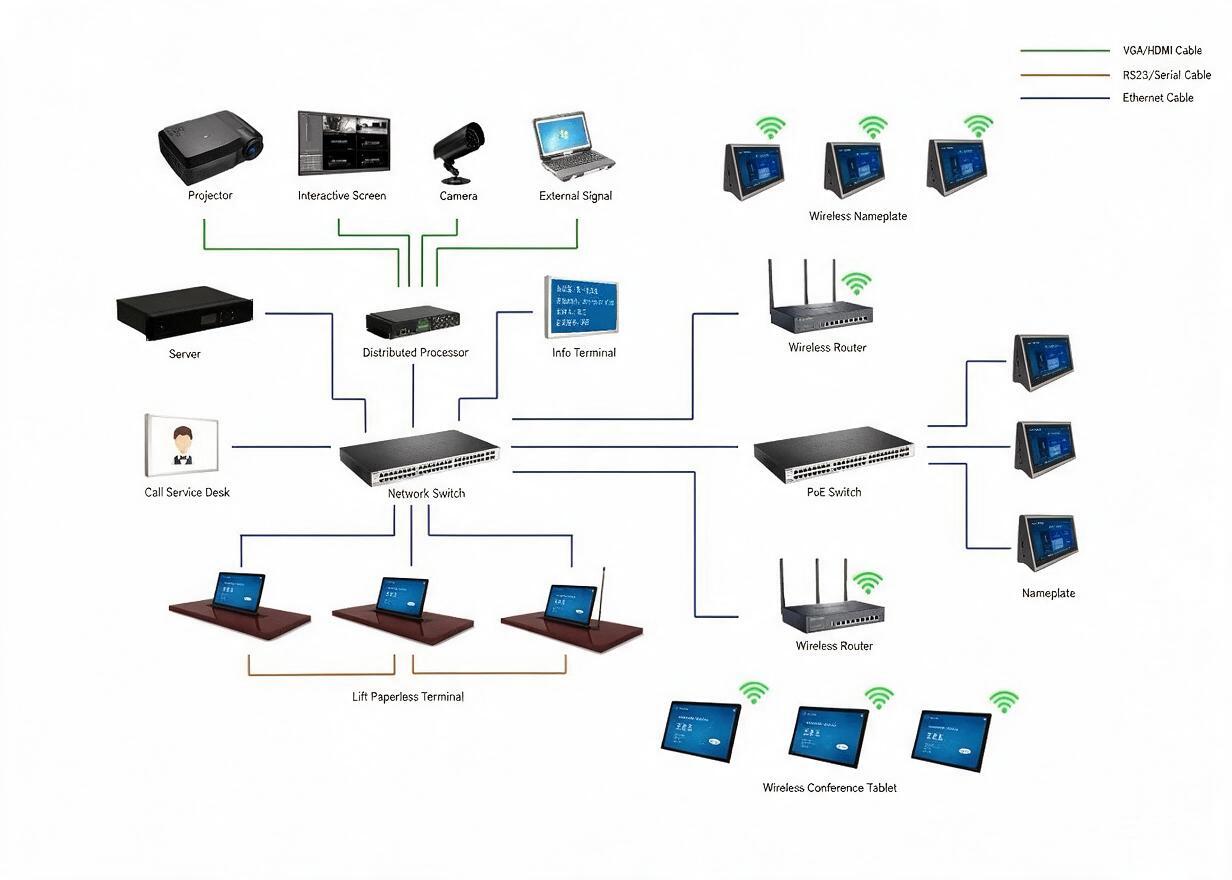
Zhihui Cloud supports integration with existing platforms to enable functions such as:
- Automatic synchronization of meeting reservations
- Automatic import of employee and participant information
- Calendar synchronization
- Connection with access control systems
- Automatic archiving of post-meeting data
- Integration with existing document workflows
Before purchasing a system, organizations should confirm which interfaces are available, whether custom API development is supported, and how future integration requirements will be handled.
4. Industry Experience: Review Completed Projects
The most practical way to evaluate a supplier is to examine what it has already delivered.
Marketing materials may describe strong technology and excellent service, but completed projects provide more useful evidence.
Procurement teams should ask:
- How many government projects has the supplier completed?
- Has it worked with security-sensitive organizations?
- Does it have experience in energy, transportation, education, or judicial environments?
- Can the supplier provide relevant project references?
- How long have the deployed systems remained in operation?
- Can existing customers confirm the quality of technical support?
Zhihui Cloud has delivered paperless meeting solutions across government, judicial, energy, transportation, and education sectors.
Representative deployments include:
Guizhou Provincial Department of Transport Emergency Command Center
The solution supports stable 24/7 operation for emergency command and coordination requirements.
A Provincial Higher People's Court
The system supports judicial deliberations, encrypted case files, access control, and traceable operation records.
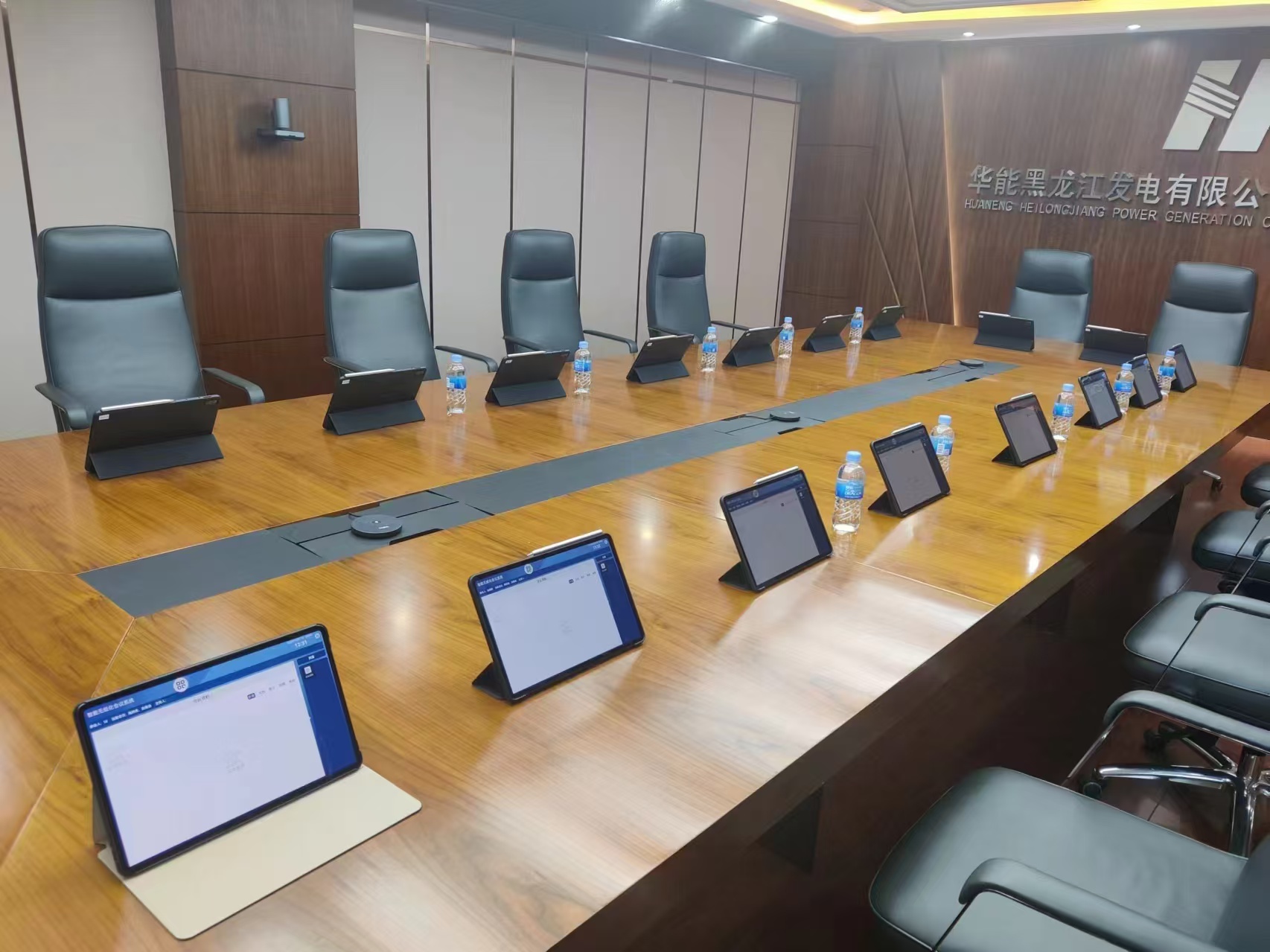
Huaneng Heilongjiang New Energy Branch
The deployed solution supports multi-department collaboration, document sharing, and remote meeting participation.
Jinan Rail Transit Group
The platform is used across operational dispatch, project evaluation, and other meeting scenarios.
Industry experience matters because suppliers that have completed comparable projects are more likely to understand the technical, operational, and security problems that may arise during deployment.
In many cases, they have already developed and tested solutions to those problems.
A Practical Evaluation Checklist
When comparing AI paperless meeting system suppliers, procurement teams should verify the following points:
Technology
- Does the supplier develop both software and hardware?
- Are transcription accuracy and latency tested under realistic conditions?
- Are AI functions integrated into the complete meeting workflow?
- Does the system support the required processors, operating systems, databases, and middleware?
- Can the supplier provide compatibility reports or test results?
Service
- Are support response times clearly defined?
- Are software updates and security patches included?
- Is on-site support available?
- Can the supplier support projects in multiple regions?
- Is long-term maintenance covered by a formal service agreement?
Customization
- Does the supplier understand the customer's industry?
- Are industry-specific solutions available?
- Can the system connect with existing OA, calendar, access control, and archiving platforms?
- Is custom API development supported?
- Can the solution adapt as workflows change?
Experience
- Has the supplier completed similar projects?
- Can it provide relevant customer references?
- Are the deployed systems still operating reliably?
- Does the supplier have experience with security-sensitive environments?
- Can it demonstrate long-term customer support?
Choosing a Long-Term Meeting Technology Partner
Selecting an AI paperless meeting system is ultimately about choosing a long-term technology partner.
Technical capability determines whether the system performs reliably. Service and support determine how long it remains effective. Customization determines whether it fits the organization's real workflows. Industry experience provides evidence that the supplier can deliver what it promises.
All four areas are essential.
Zhihui Cloud has spent years developing integrated meeting hardware and software, supporting customers across government and enterprise sectors, adapting its platform to domestic technology environments, and expanding the practical use of AI throughout the meeting lifecycle.
The company does not define a reliable solution through marketing claims alone. It focuses on systems that can be tested in real projects, operated over the long term, and adapted to the specific requirements of each customer.
Organizations currently evaluating an AI paperless meeting system can contact Zhihui Cloud to discuss their meeting environment, security requirements, integration needs, and deployment plans.
Even before a final purchasing decision is made, a detailed technical discussion can help procurement teams compare solutions more clearly and avoid costly implementation mistakes.
About Guangzhou Zhihui Cloud Technology Co., Ltd.
Guangzhou Zhihui Cloud Technology Co., Ltd. is a high-tech company specializing in digital meeting systems, paperless conference solutions, and audio-visual control technologies.
The company focuses on independent research and development and maintains an experienced paperless meeting product team. Its solutions are designed to reduce meeting preparation time, improve collaboration efficiency, strengthen information security, and provide customized digital meeting environments.
Zhihui Cloud's meeting product series has been recognized as a Guangdong High-Tech Product and has obtained software copyrights and patent certificates. The company has also received Guangdong Software Enterprise Certification.
Its solutions are suitable for government agencies, large enterprises, public institutions, military organizations, public security departments, courts, procuratorates, universities, hotels, and other professional meeting environments.